
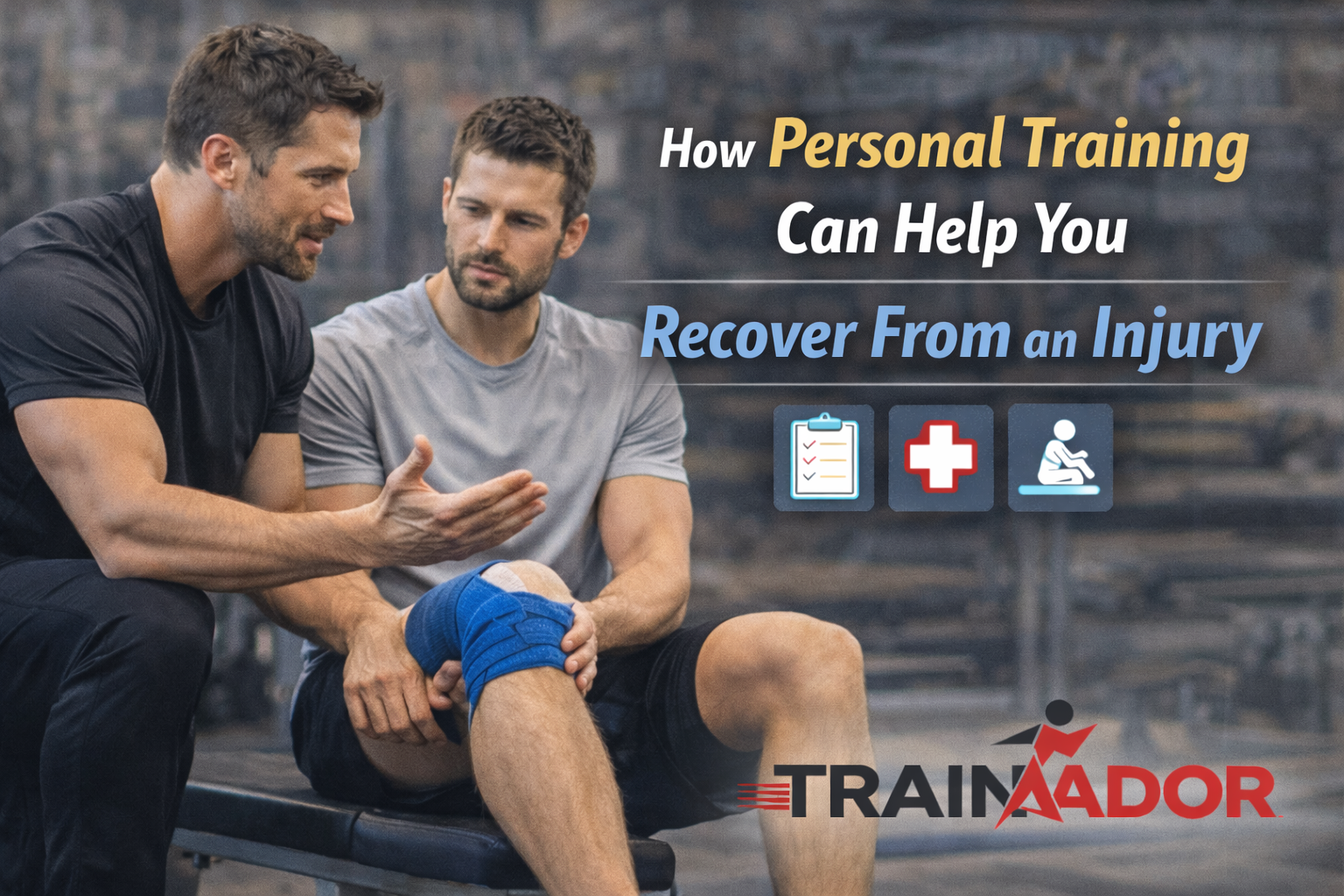
Recovering from an injury can be one of the most challenging phases in a person’s fitness journey. Whether it’s a sports-related injury, a workplace accident, or chronic pain from overuse, injuries often disrupt training routines, daily activities, and overall confidence. While medical treatment and physical therapy are essential, personal training plays a powerful role in helping individuals regain strength, mobility, and confidence after injury.
For online fitness coaches and personal trainers, understanding how to safely support injured clients is critical. With tools like Trainador Online Fitness Coach, trainers can deliver structured, progressive, and data-driven programs that help clients transition from rehabilitation to full performance.
This guide explores how personal training can help you recover from an injury and why working with a qualified trainer can accelerate your recovery journey.
Understanding the Recovery Journey After an Injury
Injury recovery typically occurs in stages. First, medical professionals address the injury through diagnosis, treatment, and clinical rehabilitation. Once pain is managed and basic function is restored, many individuals are left wondering how to safely return to exercise.
This is where personal training becomes essential. Trainers help bridge the gap between rehabilitation and full fitness by rebuilding strength, improving movement quality, and preventing future injuries.
1. Personalized Return-to-Exercise Programming
One of the biggest benefits of personal training after an injury is individualized programming. A qualified trainer considers your injury history, current limitations, fitness goals, and lifestyle to create a tailored plan.
Key elements of a post-injury program include:
- Low-impact cardiovascular training
- Progressive resistance exercises
- Mobility and flexibility drills
- Stability and corrective exercises
Instead of guessing which exercises are safe, you receive a structured plan designed specifically for your recovery stage.
2. Rebuilding Strength and Muscle Mass
Injuries often lead to periods of inactivity, which can cause muscle loss, weakness, and reduced functional capacity. Personal trainers use progressive resistance training to rebuild muscle and restore functional strength.
Benefits of strength rebuilding include:
- Improved joint stability and support
- Enhanced bone density
- Better posture and movement efficiency
- Increased confidence in daily activities and exercise
With Trainador, trainers can track strength progress, adjust loads, and ensure gradual progression to avoid setbacks.
3. Improving Mobility and Flexibility
Limited range of motion is common after injury, especially around affected joints and surrounding tissues. Personal trainers incorporate mobility and flexibility work to restore movement quality.
Common mobility strategies include:
- Dynamic stretching routines
- Joint-specific mobility drills for hips, shoulders, ankles, and spine
- Controlled articular rotations (CARs)
- Foam rolling and soft tissue techniques
Improved mobility reduces compensations, enhances performance, and lowers the risk of re-injury.
4. Correcting Movement Patterns and Technique
Poor movement mechanics are a leading cause of injuries. Personal trainers teach proper technique for exercises and daily movements, helping clients avoid harmful patterns.
Areas trainers focus on include:
- Proper lifting mechanics (squat, hinge, push, pull)
- Core bracing and spinal alignment
- Posture during sitting, standing, and walking
- Breathing patterns and coordination
By correcting these fundamentals, trainers help clients move more efficiently and safely.
5. Gradual and Safe Progression of Load
One of the biggest mistakes after injury is returning to intense training too quickly. Trainers use principles of progressive overload and load management to ensure safe progression.
Progression strategies include:
- Starting with low loads and controlled tempos
- Gradually increasing resistance, volume, and complexity
- Using autoregulation based on pain and fatigue levels
- Monitoring recovery and adjusting programs accordingly
This structured approach reduces the risk of setbacks and re-injury.
6. Psychological Support and Confidence Building
Injury recovery is not just physical—it’s mental. Many people fear re-injury or doubt their abilities after a setback. Personal trainers provide guidance, motivation, and reassurance throughout the recovery process.
Coaching strategies to build confidence:
- Setting realistic short-term and long-term goals
- Tracking progress with measurable metrics
- Celebrating milestones and improvements
- Educating clients about pain, recovery, and adaptation
Seeing objective progress through Trainador’s tracking tools helps clients regain trust in their bodies.
7. Injury Prevention Through Education and Habit Building
Personal training doesn’t just help you recover—it helps you stay injury-free. Trainers educate clients on proper warm-ups, cooldowns, recovery strategies, and lifestyle habits.
Injury prevention strategies include:
- Structured warm-up routines
- Balanced training programs addressing all muscle groups
- Recovery protocols including sleep, hydration, and nutrition
- Stress management and load balancing
Long-term habit building is one of the most valuable benefits of working with a trainer.
8. Collaboration with Healthcare Professionals
The best recovery outcomes occur when personal trainers collaborate with physical therapists and medical providers. Trainers can integrate prescribed exercises, respect contraindications, and adjust training plans based on medical guidance.
This team-based approach ensures continuity of care and maximizes recovery potential.
9. The Role of Online Coaching in Injury Recovery
Online personal training has become increasingly popular, especially for clients who prefer remote support. Platforms like Trainador Online Fitness Coach make it possible to deliver structured recovery programs, track progress, and communicate with clients from anywhere.
Key benefits of Trainador for injury recovery coaching:
- Custom program design and exercise libraries
- Progress tracking and performance analytics
- Client messaging and accountability tools
- Data-driven adjustments to training plans
- Scalable coaching for remote clients
For trainers, this technology enhances professionalism and efficiency while improving client outcomes.
When Should You Work With a Personal Trainer After an Injury?
You should consider working with a personal trainer when:
- You have been cleared by a doctor or physical therapist to exercise
- You want to rebuild strength and fitness after rehab
- You feel unsure about which exercises are safe
- You want structured guidance and accountability
A qualified trainer ensures you return to training safely and confidently.
Choosing the Right Personal Trainer for Injury Recovery
Not all trainers specialize in post-injury coaching. Look for a trainer with:
- Accredited certifications (NASM, ACE, NSCA, ISSA, etc.)
- Experience working with injured or post-rehab clients
- Knowledge of biomechanics and corrective exercise
- A collaborative approach with healthcare professionals
The right trainer prioritizes safety, education, and long-term results.
Final Thoughts
Personal training can be a powerful tool in injury recovery. By providing personalized programming, strength rebuilding, mobility training, movement correction, and psychological support, trainers help clients move beyond rehabilitation and return stronger than before.
For personal trainers and online coaches, supporting injured clients is an opportunity to make a meaningful impact and build long-term relationships. With platforms like Trainador Online Fitness Coach, trainers can deliver structured, data-driven recovery programs that enhance client outcomes and elevate their coaching business.
Ready to recover stronger and smarter? Discover how Trainador can help you design effective injury recovery programs and support your clients every step of the way.