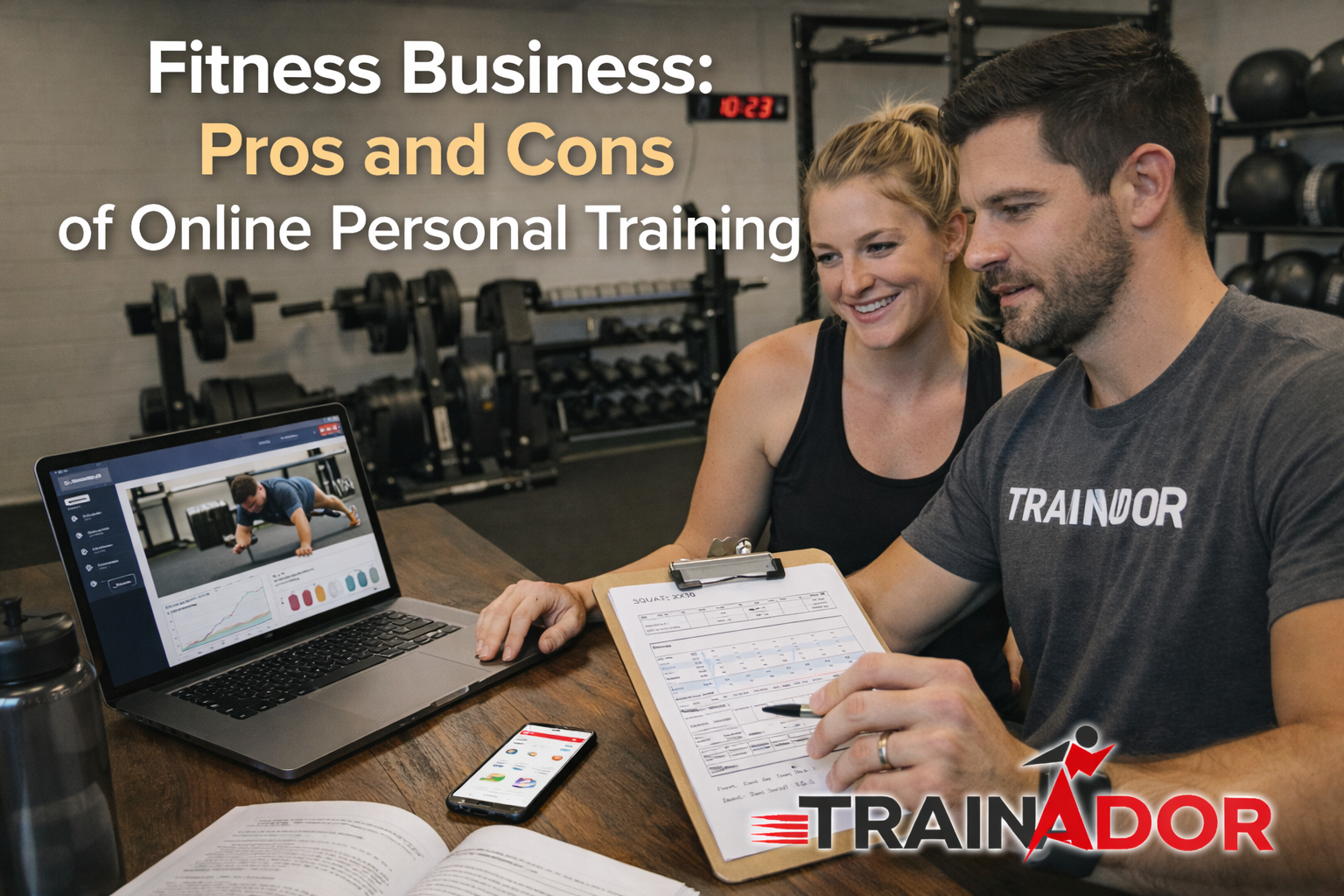
The fitness industry has transformed dramatically over the last decade. With technology evolving rapidly and more people seeking flexible solutions, online personal training has become one of the fastest-growing segments in the fitness business.
For aspiring trainers and established professionals alike, online coaching presents exciting opportunities. At the same time, it comes with its own unique challenges. If you’re considering launching or expanding your career as an online fitness coach through platforms like Trainador, understanding the pros and cons of online personal training is essential.
Let’s break it down.
What Is Online Personal Training?
Online personal training allows fitness professionals to coach clients remotely through digital platforms. This can include:
- Customized workout programs
- Virtual video sessions
- Nutrition guidance
- Progress tracking
- Messaging support
- App-based coaching
Instead of meeting clients in a gym, trainers connect through video calls, apps, and structured online systems. The model offers flexibility and scalability that traditional in-person training cannot always provide.
Pros of Online Personal Training
1. Location Freedom and Flexibility
One of the biggest advantages of online personal training is freedom.
As an online fitness coach, you’re no longer limited to clients in your local area. You can train clients across the country—or even globally. This opens up a massive market and eliminates geographic restrictions.
You also gain flexibility in your schedule. Instead of being tied to back-to-back gym sessions, you can design programs, respond to messages, and conduct virtual sessions at times that work best for you.
For many trainers, this improved work-life balance is a game-changer.
2. Lower Business Overhead Costs
Traditional personal training often requires:
- Gym rent or commission fees
- Equipment costs
- Travel time
- Facility expenses
Online training dramatically reduces these overhead costs. All you truly need is:
- A laptop or smartphone
- Reliable internet
- Coaching software or platform
- Basic branding and marketing tools
This lower cost structure increases profit margins and makes it easier to start your own fitness business with minimal financial risk.
3. Scalability and Income Potential
In-person training typically limits you to the number of hours you can physically work in a day.
Online personal training allows you to:
- Offer semi-custom programs
- Sell digital workout plans
- Create group coaching programs
- Launch online challenges
- Develop subscription-based coaching
This creates scalable income streams beyond hourly sessions. Instead of trading time for money, you build systems that allow you to serve more clients efficiently.
Platforms like Trainador empower trainers to grow beyond one-on-one sessions and build a long-term brand.
4. Increased Client Convenience
Clients love online training for many reasons:
- No commuting to the gym
- Flexible workout times
- Privacy at home
- Access to coaching anywhere
Busy professionals, parents, and frequent travelers especially benefit from remote coaching. By removing barriers like travel and scheduling conflicts, trainers can help clients stay consistent.
Consistency leads to results—and results build your reputation.
5. Access to a Niche Market
Online training allows you to specialize.
Whether your niche is:
- Weight loss for women over 40
- Muscle building for beginners
- Postpartum fitness
- Sports performance
- Corporate wellness
You can target a specific audience and position yourself as an expert. This focused branding helps you stand out in a crowded fitness market.
6. Technology-Driven Tracking and Results
Modern fitness platforms provide powerful tools such as:
- Progress tracking dashboards
- Workout logging
- Body measurement monitoring
- Habit tracking
- Direct messaging
These tools improve accountability and allow trainers to provide data-driven coaching. Clients can visually see their progress, which boosts motivation and retention.
Cons of Online Personal Training
While the opportunities are significant, online coaching also comes with challenges.
1. Less Physical Supervision
In traditional training, you can correct form instantly. You can physically demonstrate movement and ensure safety in real time.
Online training reduces this direct supervision. Even with video coaching, you may not always see every angle clearly. This requires:
- Clear instructional videos
- Detailed cues
- Strong communication skills
Trainers must be proactive in educating clients on proper form and safety.
2. Requires Strong Self-Discipline from Clients
Not all clients thrive in a remote environment.
Some individuals rely heavily on in-person accountability. Without a trainer physically present, motivation may decline. As an online coach, you must:
- Develop accountability systems
- Check in consistently
- Use habit tracking
- Build strong client relationships
Engagement becomes a core skill in online fitness coaching.
3. High Competition
The barrier to entry for online personal training is relatively low. This means competition is high.
Anyone with certification and social media can attempt to become an online coach. To stand out, you need:
- Professional branding
- Clear niche positioning
- Client testimonials
- Consistent marketing strategy
- Strong education and credentials
Advanced certifications and ongoing education play a huge role in credibility.
4. Technology Learning Curve
Running an online fitness business requires more than exercise knowledge.
You must understand:
- Coaching platforms
- Video conferencing tools
- Content creation
- Basic marketing
- Payment systems
- Social media
For trainers unfamiliar with technology, this can feel overwhelming at first. However, once systems are in place, operations become smoother.
5. Relationship Building Takes More Effort
Building deep client relationships online requires intentional communication.
You can’t rely solely on physical presence or gym energy. You must:
- Respond promptly
- Provide personalized feedback
- Celebrate wins
- Offer emotional support
Successful online coaches are excellent communicators and motivators.
Is Online Personal Training Right for You?
Online personal training is ideal for trainers who:
- Value flexibility and independence
- Want scalable income potential
- Enjoy digital communication
- Are comfortable using technology
- Want to build a personal brand
It may be less suitable for trainers who:
- Prefer face-to-face interaction
- Struggle with digital tools
- Dislike marketing or content creation
The key is self-awareness. Many trainers even combine both models—offering hybrid coaching with in-person and online services.
Why Education Still Matters in Online Fitness Coaching
Regardless of the business model, education remains the foundation of long-term success.
Clients today are more informed than ever. They expect:
- Evidence-based programming
- Safe exercise progressions
- Professional guidance
- Ethical coaching practices
Advanced certifications help trainers:
- Build authority
- Deliver better results
- Reduce liability
- Stand out in a crowded market
At Trainador, the mission goes beyond workouts. It’s about empowering coaches with knowledge, systems, and tools to thrive in the evolving fitness industry.
Final Thoughts
Online personal training has revolutionized the fitness business. It offers flexibility, scalability, and global reach—while also demanding strong communication, marketing skills, and continuous education.
The pros often outweigh the cons for trainers willing to adapt and evolve. With the right mindset, systems, and professional development, online fitness coaching can become a highly rewarding and profitable career path.
If you’re ready to grow your impact, build your brand, and embrace the digital future of fitness, now is the time to step forward.
The fitness industry is no longer confined to four gym walls. Your coaching can reach the world.
And with the right platform and education, your fitness business can thrive beyond limits.