
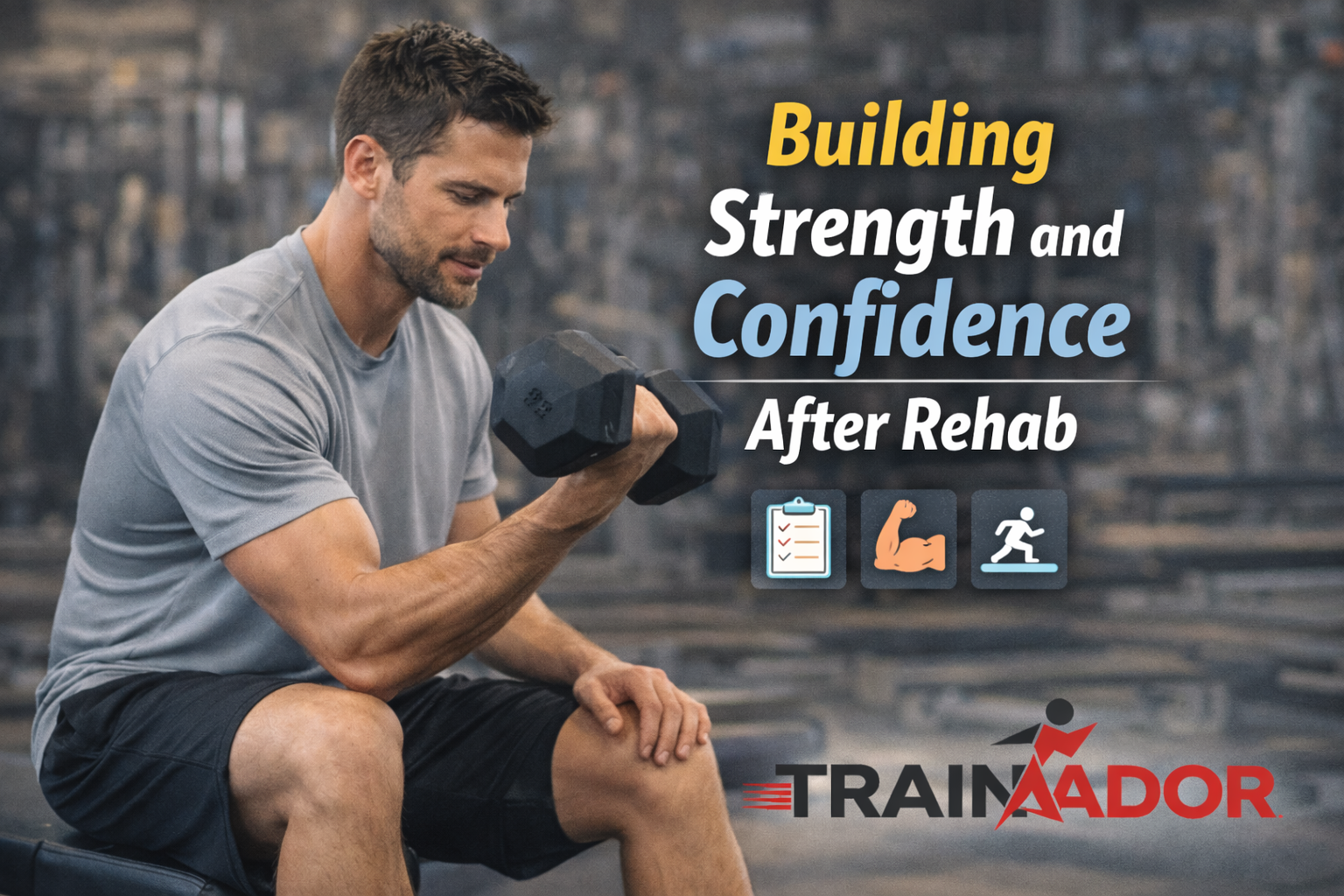
Recovering from an injury or surgery is a significant milestone, but rehabilitation is only the first step toward full recovery. Many clients finish physical therapy with basic mobility restored but still lack strength, confidence, and functional capacity. This is where personal trainers and strength coaches play a vital role.
Building strength and confidence after rehab requires a structured, progressive, and psychologically supportive approach. In this guide, we’ll explore how trainers can help clients transition from rehabilitation to high-performance training while minimizing the risk of re-injury.
Understanding the Post-Rehab Phase
Rehabilitation focuses on restoring movement, reducing pain, and regaining basic function. However, most rehab programs do not fully prepare clients for the physical demands of daily life, sports, or strength training. The post-rehab phase bridges the gap between clinical therapy and real-world performance.
During this phase, clients often experience:
- Reduced muscle strength and endurance
- Limited mobility or stability
- Fear of re-injury or movement avoidance
- Loss of confidence in their bodies
A structured training program helps clients rebuild physical capacity and mental resilience.
1. Start with a Comprehensive Assessment
Before designing a post-rehab program, personal trainers should conduct a detailed assessment to understand the client’s current abilities and limitations.
Key areas to assess include:
- Medical and injury history
- Clearance from healthcare professionals
- Range of motion and joint stability
- Strength imbalances and asymmetries
- Movement patterns (squat, hinge, push, pull, gait)
- Pain levels and psychological readiness
This assessment ensures training begins at an appropriate level and aligns with rehabilitation outcomes.
2. Rebuild Foundational Strength
After rehab, many clients have significant strength deficits in the affected area and surrounding muscles. Foundational strength training should focus on low-load, controlled movements that reinforce proper mechanics.
Effective strategies include:
- Bodyweight exercises (squats, lunges, push-ups, rows)
- Isometric holds (planks, wall sits, static lunges)
- Resistance band exercises for joint stability
- Unilateral training to correct side-to-side imbalances
Progress gradually by increasing resistance, volume, and complexity as the client adapts.
3. Emphasize Stability and Motor Control
Stability and motor control are essential for protecting joints and preventing re-injury. Post-rehab clients often have poor proprioception and neuromuscular coordination.
Include exercises that challenge stability:
- Single-leg and single-arm exercises
- Balance drills and unstable surfaces
- Slow-tempo strength movements
- Anti-rotation and anti-extension core exercises
These drills improve joint awareness and control, creating a solid foundation for advanced training.
4. Progress Mobility Safely
While rehab restores basic range of motion, clients often need continued mobility work to regain full movement quality. Mobility training should be progressive and pain-informed.
Focus on:
- Joint-specific mobility drills (hips, shoulders, ankles, thoracic spine)
- Dynamic stretching and controlled articular rotations (CARs)
- Soft tissue work such as foam rolling
- Active mobility rather than passive stretching when possible
Encourage clients to move within pain-free or low-pain ranges and avoid forcing end-range positions.
5. Gradually Reintroduce Load and Impact
Returning to heavy lifting, running, or sport-specific activities should be done gradually. Sudden increases in load or impact are a leading cause of re-injury.
Progression guidelines:
- Follow the principle of progressive overload with conservative increments
- Start with submaximal loads and controlled tempo
- Introduce plyometrics or high-impact drills only when strength and stability are adequate
- Monitor recovery and adjust volume accordingly
Use performance markers (strength, mobility, endurance) rather than timelines alone to guide progression.
6. Address the Psychological Side of Recovery
Confidence is just as important as physical strength after rehab. Many clients fear re-injury, which can limit effort and progress.
Coaching strategies to build confidence include:
- Setting achievable short-term goals
- Educating clients about pain and recovery
- Using positive reinforcement and feedback
- Demonstrating progress through data and performance metrics
- Encouraging autonomy and self-efficacy
A supportive coaching environment helps clients trust their bodies and the training process.
7. Teach Proper Technique and Movement Literacy
Post-rehab clients often need to relearn fundamental movement patterns. Trainers should emphasize technique before intensity.
Key movement skills to coach:
- Neutral spine and bracing techniques
- Hip hinge mechanics for lifting
- Proper squat and lunge patterns
- Scapular control during pushing and pulling exercises
Using video feedback, tactile cues, and regressions can accelerate motor learning and reduce compensatory patterns.
8. Monitor Progress with Data and Feedback
Tracking progress is essential for maintaining motivation and adjusting training programs. Metrics can include:
- Strength improvements
- Range of motion gains
- Pain levels and symptom changes
- Functional performance tests
- Client-reported confidence and readiness
Coaching platforms like Trainador allow trainers to log exercises, monitor progress, and communicate with clients, creating a structured and accountable post-rehab program.
9. Collaborate with Healthcare Professionals
Collaboration with physiotherapists and medical professionals ensures continuity of care and reduces the risk of setbacks. Trainers should follow medical guidelines and integrate prescribed exercises into training plans when appropriate.
Open communication between professionals creates a seamless transition from rehab to performance training.
Final Thoughts
Building strength and confidence after rehab is a transformative journey for clients. With the right training approach, clients can move beyond recovery and achieve higher levels of performance and resilience than before their injury.
Personal trainers and strength coaches play a critical role in this process. By assessing clients thoroughly, rebuilding foundational strength, improving stability and mobility, progressing load safely, and addressing psychological factors, trainers can guide clients toward a confident and capable return to training.
Leveraging digital coaching platforms like Trainador further enhances program delivery, progress tracking, and client communication—helping trainers deliver professional, data-driven post-rehab coaching.
With patience, expertise, and structured programming, post-rehab clients can rebuild their bodies, regain confidence, and return stronger than ever.