
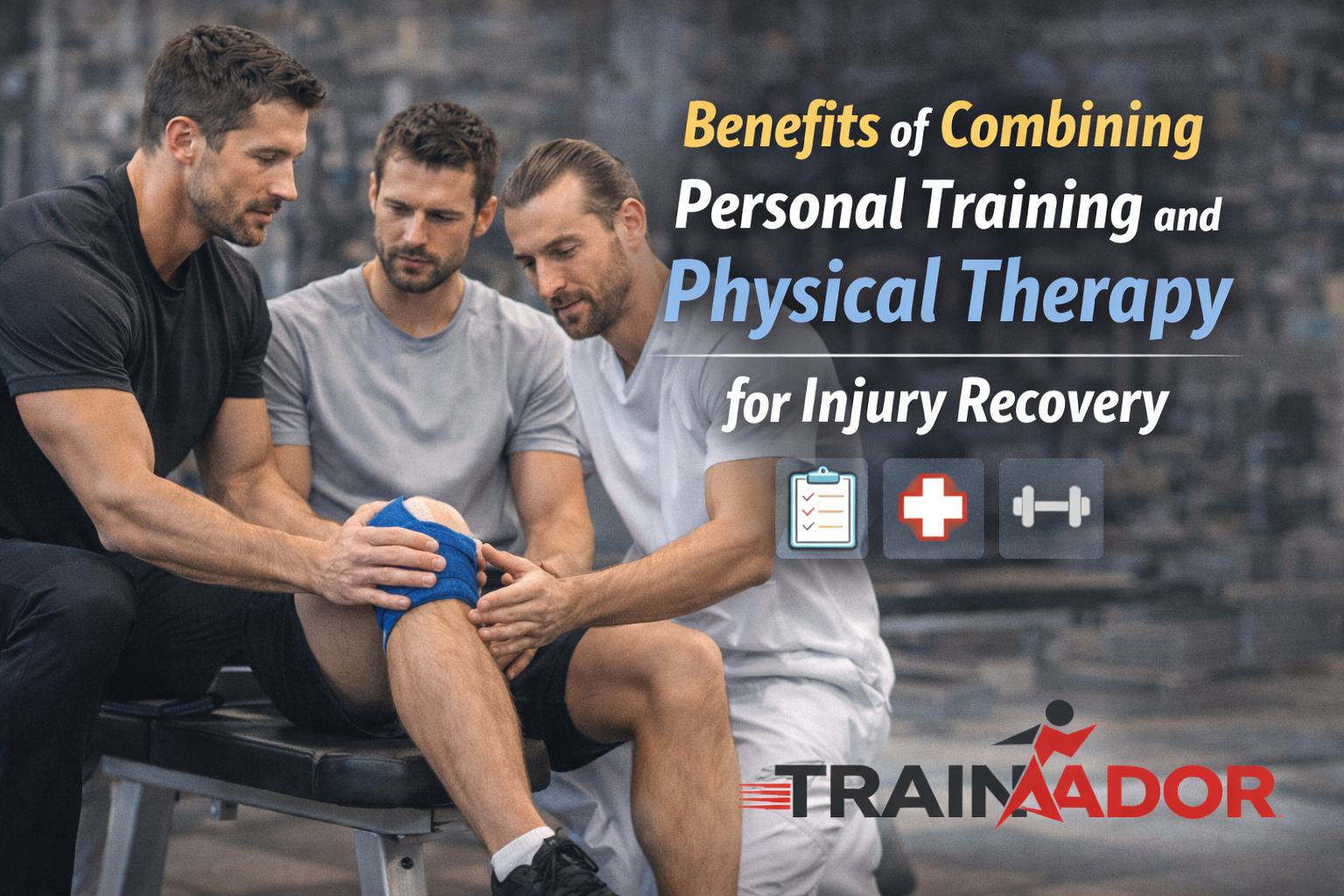
Injury recovery can be a long, frustrating journey—especially for clients who want to return to exercise, sports, or everyday activities as quickly and safely as possible. While physical therapy (PT) plays a crucial role in restoring movement and reducing pain, personal training is essential for rebuilding strength, confidence, and long-term fitness habits.
For personal trainers and online fitness coaches, understanding how personal training and physical therapy can work together is a powerful way to support injured clients. Platforms like Trainador Online Fitness Coach help bridge this gap by enabling trainers to deliver structured programs, track progress, and collaborate with healthcare professionals when appropriate.
In this guide, we’ll explore the key benefits of combining personal training and physical therapy for injury recovery—and how trainers can use this approach to improve outcomes for their clients.
1. A More Complete Recovery Approach
Physical therapists focus on restoring mobility, reducing pain, and correcting dysfunctions caused by injury. Personal trainers, on the other hand, specialize in improving strength, endurance, body composition, and overall performance.
When these two disciplines are combined, clients receive a holistic recovery plan that covers both rehabilitation and long-term fitness. Instead of stopping after PT discharge, clients transition smoothly into structured training that continues their progress.
Key benefit: Clients avoid the common cycle of rehab → inactivity → re-injury by maintaining guided strength and conditioning.
2. Faster Return to Functional Strength
Physical therapy often focuses on restoring basic function—such as walking, lifting light objects, or performing daily tasks. While this is essential, many clients want to return to higher-level activities like sports, gym workouts, or physically demanding jobs.
Personal trainers can build on PT progress with progressive strength training, mobility work, and conditioning. This structured progression helps clients regain functional strength more efficiently.
Example: A client recovering from a knee injury may regain basic mobility in PT, but a trainer can help rebuild squat strength, stability, and athletic performance.
3. Improved Exercise Technique and Movement Quality
Injury often occurs due to poor movement patterns, muscle imbalances, or improper training techniques. Physical therapists identify and correct these issues, while personal trainers reinforce proper movement during workouts.
By combining both, clients receive consistent coaching on posture, lifting mechanics, and movement control. Over time, this significantly reduces injury risk and improves performance.
For trainers: Using Trainador’s exercise libraries and form tracking features helps ensure clients follow correct technique even in online coaching settings.
4. Personalized Progression from Rehab to Performance
One of the biggest challenges after PT is knowing how to progress safely. Many clients either push too hard too soon or remain overly cautious and undertrain.
Personal trainers create structured programs that gradually increase load, volume, and complexity based on the client’s recovery status. When informed by PT guidance, this progression becomes safer and more effective.
Result: Clients build confidence while avoiding setbacks.
5. Enhanced Client Confidence and Motivation
Injury can take a psychological toll. Clients may fear re-injury, doubt their abilities, or lose motivation. Combining PT and personal training provides continuous support, reassurance, and accountability.
Trainers play a key role in rebuilding confidence by celebrating milestones, tracking progress, and providing positive reinforcement. With platforms like Trainador, clients can visualize progress through metrics, photos, and performance data.
6. Better Long-Term Health and Injury Prevention
Physical therapy addresses the immediate injury, but long-term injury prevention requires consistent strength training, mobility work, and lifestyle changes. Personal trainers help clients maintain these habits long after rehab ends.
A combined approach ensures that clients don’t just recover—they become stronger, more resilient, and less prone to future injuries.
Preventive benefits include:
- Improved joint stability
- Stronger muscles and connective tissue
- Better posture and movement mechanics
- Increased physical literacy and awareness
7. Seamless Communication Between Professionals
When trainers and physical therapists collaborate, clients benefit from consistent messaging and aligned goals. Trainers can adjust programs based on PT recommendations, and therapists can provide insights on contraindications or limitations.
Online coaching platforms like Trainador make it easier to document exercises, share progress reports, and maintain structured programming that aligns with rehabilitation guidelines.
8. Greater Client Retention and Business Growth for Trainers
For personal trainers and online coaches, working with post-rehab clients can be a major business opportunity. Clients who transition from PT to training often become long-term clients, as they recognize the value of guided recovery and performance coaching.
Offering injury-informed training services positions you as a trusted professional, increases referrals from healthcare providers, and strengthens your coaching brand.
How Personal Trainers Can Safely Work with Injured Clients
To maximize the benefits of combining personal training and physical therapy, trainers should:
• Respect Scope of Practice
Trainers should not diagnose injuries or provide medical treatment. Instead, work within your expertise and refer clients to licensed professionals when needed.
• Request Medical Clearance
Before starting training, ensure the client has clearance from their physical therapist or physician.
• Start with Low-Intensity Programming
Begin with mobility, stability, and light resistance exercises before progressing to heavier loads.
• Track Progress and Symptoms
Use digital coaching tools like Trainador to monitor pain levels, movement quality, and performance metrics.
• Educate Clients
Teach clients about recovery timelines, proper warm-ups, and injury prevention strategies.
Why Trainador Is Ideal for Injury-Informed Coaching
Trainador Online Fitness Coach provides tools that help trainers support injured and post-rehab clients effectively:
- Custom program design for rehab-to-strength transitions
- Exercise libraries with instructional videos
- Client progress tracking and analytics
- Communication tools for coaching and accountability
- Online delivery for remote or hybrid clients
With Trainador, trainers can deliver structured, safe, and scalable coaching programs that align with rehabilitation principles.
Final Thoughts
Combining personal training and physical therapy creates a powerful recovery pathway that goes beyond simply healing injuries. Clients regain function, rebuild strength, restore confidence, and develop long-term habits that keep them healthy and active.
For personal trainers and online coaches, this integrated approach not only improves client outcomes but also elevates your professional credibility and business potential. By using platforms like Trainador to deliver structured, data-driven coaching, you can become a key part of your clients’ recovery and performance journey.
Ready to level up your coaching? Explore how Trainador Online Fitness Coach can help you support injured clients and grow your training business today.