
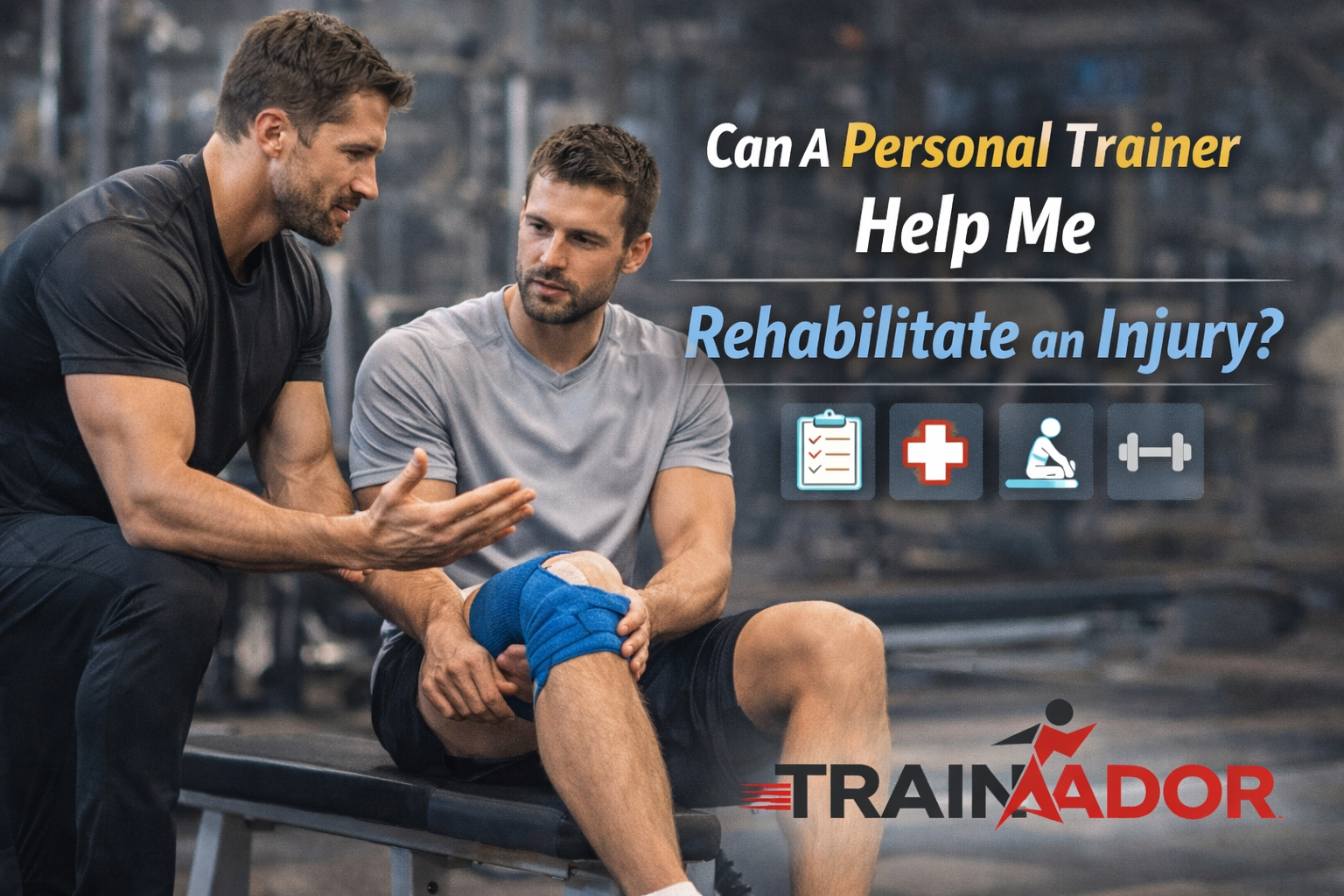
Recovering from an injury can be a challenging and sometimes confusing process. Many people wonder whether a personal trainer can help them rehabilitate safely, especially after completing medical treatment or physical therapy. While personal trainers are not medical professionals and cannot diagnose or treat injuries, they can play a powerful role in the rehabilitation journey—particularly during the return-to-exercise phase.
In this guide, we’ll explore what personal trainers can and cannot do, how they support injury rehabilitation, and how clients can safely work with trainers after an injury.
Understanding Injury Rehabilitation vs. Fitness Training
Injury rehabilitation typically occurs in two phases:
- Clinical rehabilitation, guided by healthcare professionals such as physiotherapists, sports medicine doctors, or chiropractors.
- Post-rehab fitness and reconditioning, where clients gradually rebuild strength, mobility, and confidence in movement.
Personal trainers are most effective in the post-rehabilitation phase. Their role is to help clients transition from therapy exercises to full fitness training, ensuring progress is safe, structured, and sustainable.
What Personal Trainers Can Do After an Injury
Although trainers are not licensed to provide medical treatment, they can significantly contribute to recovery and long-term injury prevention.
1. Design Safe Return-to-Exercise Programs
A qualified personal trainer can create a customized program based on your injury history, limitations, and goals. This often includes:
- Low-impact cardiovascular exercises
- Strength training with modified loads and ranges of motion
- Mobility and flexibility work nBy gradually increasing intensity, trainers help prevent re-injury and build resilience.
2. Improve Strength and Stability
Many injuries occur due to muscular imbalances, weak stabilizing muscles, or poor movement mechanics. Trainers focus on strengthening key muscle groups such as:
- Core muscles for spinal stability
- Glutes and hips for lower-body alignment
- Scapular muscles for shoulder health
Improved strength and stability reduce stress on joints and tissues, lowering the risk of future injuries.
3. Correct Movement Patterns and Technique
Improper technique during exercise or daily activities often contributes to injury. Trainers teach clients how to:
- Lift with proper form
- Maintain neutral spine alignment
- Use appropriate posture during sitting, standing, and lifting
These corrections not only aid recovery but also enhance overall performance.
4. Build Confidence in Movement
After an injury, many people fear moving or returning to exercise. This fear can lead to inactivity, muscle loss, and slower recovery. Trainers provide guidance, encouragement, and gradual progression to help clients regain confidence in their bodies.
5. Support Long-Term Injury Prevention
A personal trainer doesn’t just help you recover—they help you stay injury-free. By improving movement quality, load management, and recovery habits, trainers reduce the likelihood of recurring injuries.
What Personal Trainers Cannot Do
It’s important to understand the limits of a personal trainer’s scope of practice. Trainers cannot:
- Diagnose injuries or medical conditions
- Provide medical treatment or manual therapy
- Prescribe rehabilitation exercises meant for clinical therapy (unless cleared by a healthcare professional)
If you experience severe pain, numbness, tingling, or loss of function, you should consult a qualified medical professional before training.
When Should You Work with a Personal Trainer After an Injury?
You can benefit from a personal trainer when:
- Your doctor or physiotherapist has cleared you for exercise
- You have completed initial rehabilitation exercises
- You want to regain strength, endurance, and mobility
- You need guidance to return to sports or daily activities
Many healthcare professionals recommend working with a certified trainer during the transition back to full activity.
How Trainers Collaborate with Healthcare Professionals
The best outcomes occur when personal trainers collaborate with physiotherapists and medical providers. Trainers can follow guidelines from healthcare professionals, integrate prescribed exercises into training programs, and monitor progress.
This collaborative approach ensures continuity of care and minimizes the risk of setbacks.
Key Qualities to Look for in a Trainer for Injury Recovery
If you’re recovering from an injury, choose a trainer with:
- Accredited certifications (NASM, ACE, NSCA, ISSA, etc.)
- Experience working with post-rehab clients
- Knowledge of corrective exercise and biomechanics
- Strong communication and collaboration skills
A trainer who listens, adapts programs, and prioritizes safety is essential.
How Technology Enhances Injury Recovery Coaching
Modern coaching platforms like Trainador allow trainers to track progress, adjust programs, and communicate with clients remotely. Trainers can monitor pain levels, exercise compliance, and recovery metrics, ensuring data-driven programming and consistent support.
Digital platforms also make it easier for clients to follow structured programs and stay accountable during recovery.
Final Thoughts
So, can a personal trainer help you rehabilitate an injury? Yes—but with important boundaries. Personal trainers play a crucial role in the post-rehabilitation phase by rebuilding strength, correcting movement patterns, and preventing future injuries. However, they should work alongside healthcare professionals and never replace medical treatment.
With the right trainer, proper clearance from a medical professional, and a structured program, you can safely return to exercise, regain confidence, and build a stronger, more resilient body.
If you’re a trainer working with injured clients, investing in continuing education and leveraging coaching platforms like Trainador can elevate your practice and deliver safer, more effective results for your clients.